
Swollen, Painful Leg: When a DVT Ultrasound Is Needed Urgently

Swollen, Painful Leg When a DVT Ultrasound Is Needed Urgently

Important Note

A swollen, painful leg needs prompt medical attention. If you develop new swelling or pain in one leg, seek urgent medical assessment today. Do not wait for a routine ultrasound appointment. If you experience chest pain, sudden difficulty breathing, cough up blood, or collapse, call 000 immediately. A doctor will assess your symptoms and determine whether you need an urgent DVT ultrasound.

When Does a Swollen, Painful Leg Need Urgent Attention?

Have you noticed swelling and pain in your leg recently? Leg swelling and pain can have several causes, including an injury or a problem with the veins. When these symptoms appear suddenly and have no clear explanation, deep vein thrombosis (DVT) is one possibility doctors need to consider. You might be tempted to wait for the discomfort to settle on its own, especially if you have been busy or recently travelled. However, even if the pain seems manageable, suspected DVT needs prompt medical assessment. You cannot confirm or rule out a clot by how your leg looks or feels. Your doctor may recommend blood tests, a vascular Doppler ultrasound, or other checks depending on your symptoms and medical history.

What Is Deep Vein Thrombosis (DVT)?

Deep vein thrombosis occurs when a blood clot forms in a vein deep inside the body. It usually affects the calf or thigh and can interfere with normal blood flow. However, the main concern is that part of the clot can break away and travel to the lungs. This can cause a pulmonary embolism, a serious and potentially life-threatening condition. An early assessment helps doctors determine whether a clot is present and whether treatment is needed.

What Are the Warning Signs of a Blood Clot in the Leg?

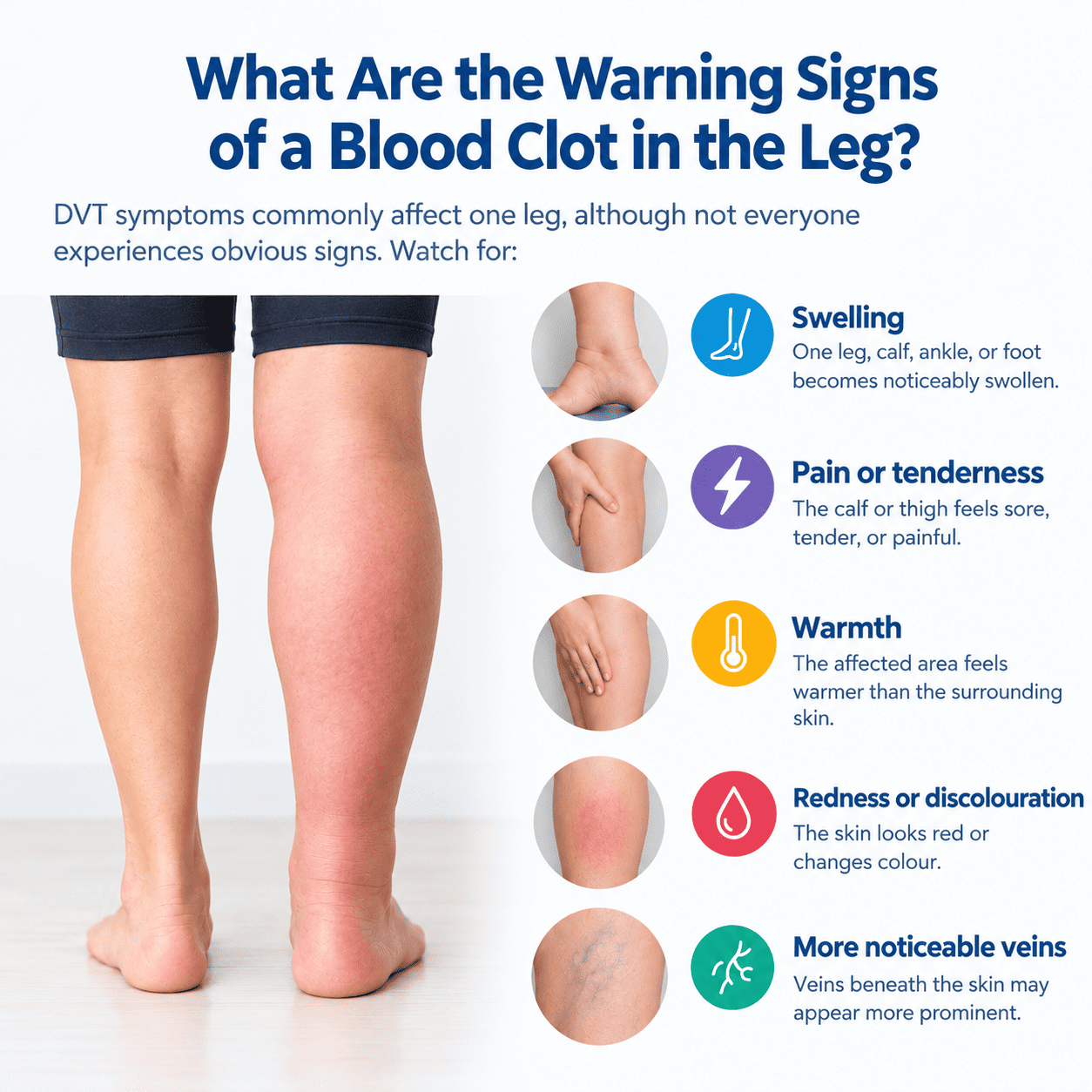
DVT symptoms commonly affect one leg, although not everyone experiences obvious signs. Watch for:

  • Swelling: One leg, calf, ankle, or foot becomes noticeably swollen.
  • Pain or tenderness: The calf or thigh feels sore, tender, or painful.
  • Warmth: The affected area feels warmer than the surrounding skin.
  • Redness or discolouration: The skin looks red or changes colour.
  • More noticeable veins: Veins beneath the skin may appear more prominent.

These symptoms can also occur with other conditions, so their presence alone does not confirm a blood clot. However, some people can also have a silent DVT with few or no noticeable symptoms. So if you have new, unexplained leg swelling or pain, talk to your local GP or seek urgent medical assessment.

What Are the Warning Signs of a Blood Clot in the Leg

How Do Doctors Check for a DVT?

If your doctor suspects a blood clot, they will consider your symptoms, medical history, and risk factors before deciding which tests are appropriate. The process may include the following steps.

1. Medical history and examination

Your doctor will ask when the symptoms started, examine your leg, and check for factors that could increase your risk of a clot.

2. Assessing the likelihood of DVT

Your doctor may use a clinical tool such as the Wells score to estimate the likelihood of DVT. The score is considered alongside your symptoms, examination, and other test results.

3. A D-dimer blood test, when appropriate

If DVT is considered unlikely, a negative D-dimer blood test may help rule it out. A raised D-dimer level does not necessarily mean you have a clot, as levels can increase for other reasons. Your doctor will interpret the result alongside your symptoms and decide whether imaging is needed.

4. An ultrasound scan

If DVT is considered likely, or a blood test indicates that further investigation is needed, your doctor may request a venous Doppler ultrasound or vascular ultrasound to check blood circulation in the veins. This examination assesses the leg veins for signs of a clot. If imaging cannot be arranged promptly, a doctor may decide to start blood-thinning medication while the patient awaits further testing. This depends on the clinical assessment and the person’s risk of bleeding. It is a medical decision and should never be attempted without medical advice. The next step depends on your clinical assessment. Your doctor will decide whether you need an urgent ultrasound or another test first.

Who May Have a Higher Risk of DVT?

DVT can affect anyone, but some situations make a blood clot more likely. These include:

  • Recent surgery, hospitalisation, or a significant injury
  • Long periods of immobility, including long-distance travel
  • Pregnancy and the period after giving birth
  • Oestrogen-containing contraceptives or hormone replacement therapy
  • Cancer, certain clotting disorders, or a previous DVT

Having these risk factors does not mean you have DVT, and a clot can develop without an obvious cause. New, unexplained leg swelling or pain still needs prompt medical assessment, even if you have no known risk factors.

What Happens During a DVT Ultrasound?

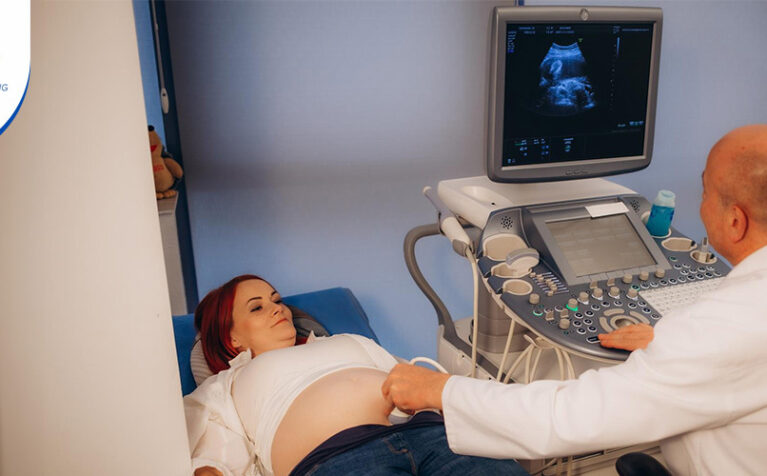
A DVT ultrasound uses sound waves to examine the veins and assess blood flow in your leg. During the examination, a sonographer will apply gel to the skin and move a handheld probe over the area being assessed. They may apply gentle pressure to the veins as part of compression ultrasound. The scan is non-invasive and does not use ionising radiation.

The scan may examine part or all of the leg, depending on the type of ultrasound requested.  If the first scan does not provide a conclusive answer, your doctor may recommend further testing or a repeat ultrasound. Your doctor will interpret a negative result alongside your symptoms and the type of scan performed to determine whether further testing is needed. If DVT is confirmed, treatment often involves anticoagulant medication to stop the clot from growing and reduce the risk of further clots. Your doctor will recommend treatment based on your individual circumstances.

Can You Get a Bulk-Billed DVT Ultrasound?

If you need an urgent DVT ultrasound, it is worth checking the cost and whether Medicare bulk billing applies before booking. At Insight Diagnostic Imaging, we bulk bill DVT ultrasound and most other examinations for eligible patients with a valid referral and Medicare card. However, billing arrangements depend on the examination and your eligibility, so it is best to confirm whether bulk billing applies to your DVT ultrasound before booking. If your doctor has asked you to arrange an urgent scan, let the clinic know when you call.

Pulmonary Embolism: When to Call 000

If a blood clot travels to the lungs, it can cause a pulmonary embolism. Symptoms may include sudden shortness of breath, chest pain, coughing up blood, a racing heartbeat, dizziness, or fainting. Call 000 immediately if you experience these symptoms. Do not wait to arrange an outpatient ultrasound or drive yourself to hospital if you may be experiencing a medical emergency.

Arrange a DVT Ultrasound at Insight Diagnostic Imaging

If your doctor has requested a DVT ultrasound, Insight Diagnostic Imaging can help you enquire about venous imaging at our Springvale and Dandenong clinics. Our vascular Doppler ultrasound services include venous Doppler examinations used to investigate concerns such as suspected DVT. Call (03) 9522 9898 to ask about appointment availability, referral requirements, and billing arrangements. Our clinics are open Monday to Friday, 9 am to 6 pm, and Saturday, 9 am to 1 pm. You can also contact our team for booking enquiries.

If your doctor suspects DVT, seek medical assessment promptly and let them guide the next steps. If you cannot access timely care, attend an emergency department. For symptoms of a possible pulmonary embolism, call 000 for emergency services.

Frequently Asked Questions 

1. Can a DVT be diagnosed without an ultrasound?

In some cases, a doctor can help rule out DVT using a clinical assessment and a negative D-dimer blood test. If further investigation is needed, an ultrasound is commonly used to assess the leg veins.

A written request from a doctor or other eligible health professional is generally required. Contact Insight Diagnostic Imaging to confirm the requirements for your scan.

The duration depends on the area examined and the scan protocol. Contact the clinic when booking to ask about the expected appointment time.

It depends on the type of ultrasound and your clinical circumstances. Your doctor may recommend further assessment or a repeat scan if DVT cannot be confidently excluded.

Insight Diagnostic Imaging bulk bills most ultrasound examinations for eligible patients with a valid referral and Medicare card. Contact the clinic to confirm whether this applies to your DVT scan.

The scan is generally well tolerated. The sonographer may apply gentle pressure to examine the veins, which can feel uncomfortable if the leg is already tender.

Related Posts